
Germany’s dependence on imported energy comes with a bill and a risk. In 2024, the country imported around 95% of its natural gas and 98% of its oil. Net fossil-fuel imports cost €76 billion, according to the government’s new roadmap.
Published on 23 September, the roadmap connects energy security with Germany’s 2045 climate-neutrality target. Renewed disruption in the Middle East adds urgency: reducing fossil-fuel demand means buying less exposure to overseas supply shocks.
What the roadmap commits to
The document largely consolidates existing policies. Its main milestones include:
- Electricity: at least 80% renewable electricity consumption by 2030 and an end to coal-fired generation by 2038 at the latest.
- Heating: greater use of heat pumps and district heating, with heat networks becoming climate-neutral by 2045.
- Transport: support for electric vehicles and expanded charging infrastructure.
- Buildings: around €44 billion through 2030 for climate programmes, subject to available budgets.
It combines legislation, funding, proposals and forecasts. These are not interchangeable: an expected increase in heat-pump sales is not an installation requirement for every building.
For property owners, our reading is practical: use upcoming maintenance and investment decisions to prepare each building. Three places to start follow.
1. Assess EV charging as a tenant amenity
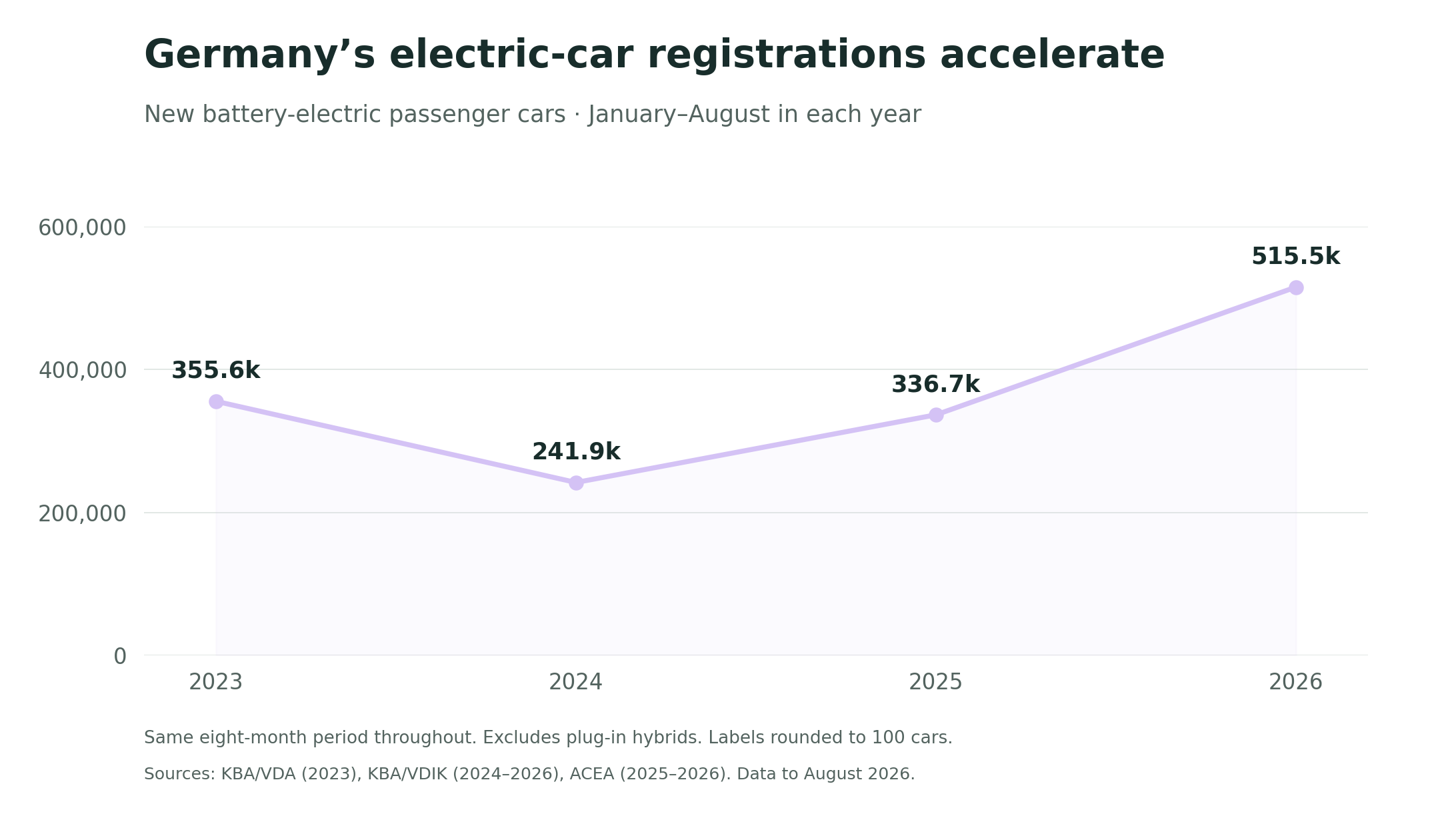
Germany registered more than 515,000 new battery-electric cars in the first eight months of 2026, up 53% on the same period last year. They accounted for 26.2% of new registrations, compared with 18% a year earlier.
For tenants switching to electric cars, somewhere to charge becomes part of choosing where to live or work. On-site charging can make a property more practical, especially where public alternatives are limited. A rent or valuation premium should not be assumed.
Start with tenant demand, parking patterns and nearby provision. Cars parked overnight or throughout the working day often have time to charge at lower power. Installing the fastest equipment everywhere may add expense without much benefit.
Plan the cabling and shared infrastructure for expansion, even if only a few chargers are needed initially. Decide who will operate them, pay for maintenance and bill users before installation. Germany’s National Centre for Charging Infrastructure sets out these planning choices in its residential guide.
2. Reduce energy waste before replacing existing systems
A replacement project is a good moment to question how the current system runs. Are heating schedules appropriate for occupancy? Are rooms overheating? Are water temperatures higher than necessary?
Correcting these problems can cut consumption now and provide a clearer starting point for investment. But lower annual bills do not necessarily mean the building needs a smaller heat pump. Replacement capacity must still meet demand in cold weather, with hot-water requirements assessed too. Accurate heat-loss calculations matter more than copying the rating on the old boiler.
Ask the designer to account for planned insulation or window improvements, where relevant, and explain the proposed capacity. The aim is to avoid paying for unnecessary equipment while maintaining comfort.
3. Plan electrical upgrades together
Heat pumps, EV chargers, solar panels and batteries all affect the building’s electricity connection. Assessing them separately can miss opportunities to share available capacity.
The crucial question is how much power the building needs at the same time. Charging can sometimes be spread across the hours cars are parked, leaving capacity for heating and other uses. Load management can therefore reduce the need for a larger connection.
Solar and storage belong in that assessment, but their contribution needs testing against actual demand. Solar generation cannot be relied on during a dark winter peak; a battery needs sufficient charge and output to help when required.
Ask for a combined demand assessment before approving separate equipment purchases.
If you’re planning energy upgrades, neos can help you understand how your buildings use energy and identify operational improvements before larger investment decisions.